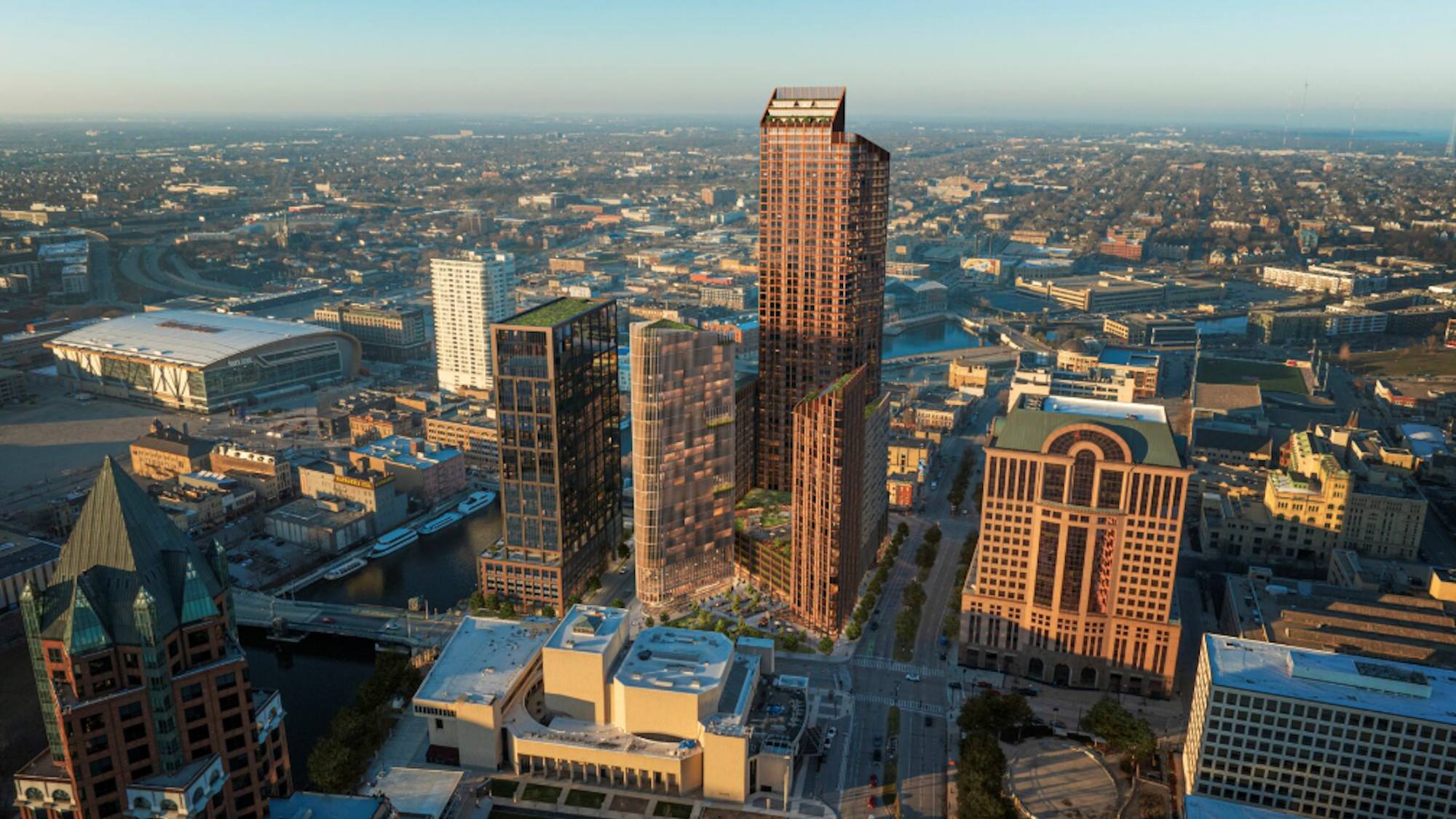
Milwaukee has been home to the world’s tallest timber skyscraper for barely two years, but the city is already aiming to more than double that height. Last month, Wisconsin’s largest metropolis announced plans for a new, unnamed project that will feature up to 55 floors built largely from engineered mass timber materials. If all goes according to plan, the skyscraper will be nearly 600-feet-tall when complete—far surpassing Milwaukee’s current record-holder, the 25-story Ascent tower completed in 2022.
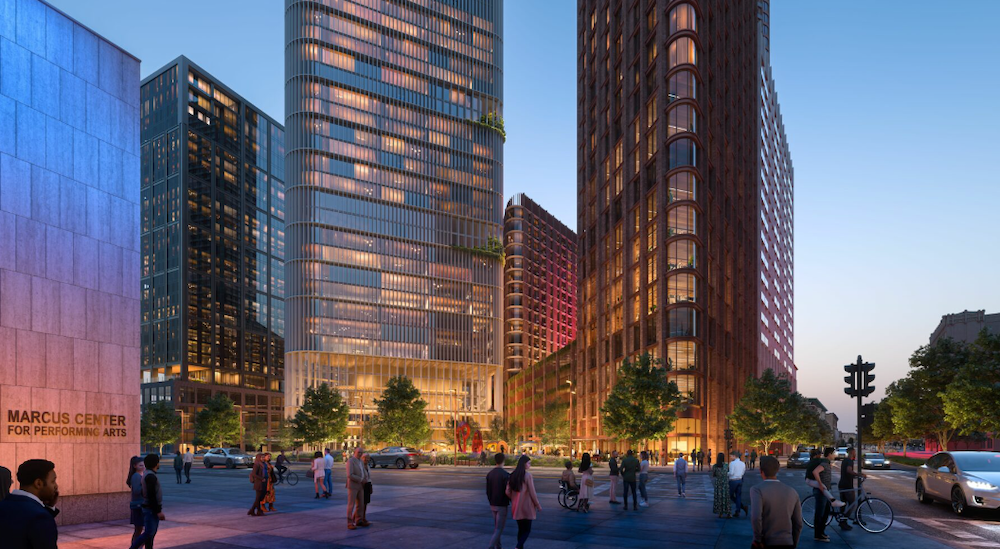
The 1.2 million square foot endeavor will be part of the ongoing Marcus Performing Arts Center renovations and overseen by Michael Green Architecture (MGA), a firm specializing in modern timber construction methods. Planned to unfold over multiple phases, the 55-story high-rise could include up to 750 residential units, 190,000 square feet of office space, 40,000 square feet of retail space, 300 hotel rooms, 1,100 structured parking spaces, along with public walkways and plazas.
The idea of a timber skyscraper may conjure images of rickety towers liable to burst into flames with the smallest spark or dropped match—but these aren’t built with simple wooden beams. Mass timber (also known as engineered wood or manufactured board) are factory-made materials using multiple layers of wood glued together to form a stronger, single piece. Plywood and composite boards are some of the most recognizable examples, but MGA will rely on much stronger options like glulam and cross-laminated timber (CLT) that are specifically designed to withstand stress, moisture, and other environmental pressures.
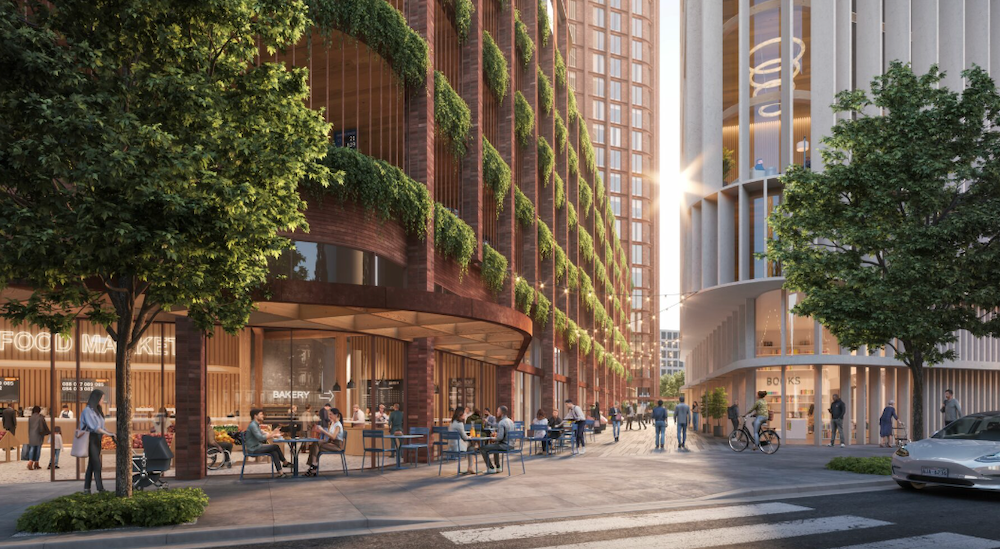
Mass timber is often lighter and more eco-friendly than steel and concrete. Credit: Michael Green Architecture
Mass timber supplies are increasingly popular because they are often much cheaper, lighter, and eco-friendly than the notoriously dirty concrete and steel manufacturing industries. In many instances, they are also actually more fire resistant than modern building components due to their charring properties.
All that said, there are still safety limits for how high architects can build structures solely from mass timber. In 2021, new International Building Code (IBC) standards limited mass timber-only projects to 18 floors. The world’s tallest entirely mass timber building, Norway’s Mjøstårnet, is just 280-feet-tall. And as New Atlas noted on August 9, Milwaukee’s 25-floor Ascent required at least some concrete and steel reinforcements, so it’s almost certain MGA’s project will need the same. Still, ambitious eco-friendly architecture alternatives are always a welcoming sight, and if all goes according to plan, Milwaukee will likely secure its record-holding status for a while.
This entry was posted on Sunday, August 18th, 2024 at 3:53 am and is filed under Green Design. You can follow any responses to this entry through the RSS 2.0 feed.
Both comments and pings are currently closed.
Comments are closed.
ABOUT
Black Swans / Green Shoots examines the collision between urbanization and resource scarcity in a world affected by
climate change, identifying opportunities to build sustainable cities and resilient infrastructure through the use
of revolutionary capital, increased awareness, innovative technologies, and smart design to make a difference in the
face of global and local climate perils.
'Black Swans' are highly improbable events that come as a surprise, have major disruptive effects, and that are
often rationalized after the fact as if they had been predictable to begin with. In our rapidly warming world, such
events are occurring ever more frequently and include wildfires, floods, extreme heat, and drought.
'Green Shoots' is a term used to describe signs of economic recovery or positive data during a downturn. It
references a period of growth and recovery, when plants start to show signs of health and life, and, therefore, has
been employed as a metaphor for a recovering economy.
It is my hope that Black Swans / Green Shoots will help readers understand both climate-activated risk and
opportunity so that you may invest in, advise, or lead organizations in the context of increasing pressures of
global urbanization, resource scarcity, and perils relating to climate change. I believe that the tools of business
and finance can help individuals, businesses, and global society make informed choices about who and what to
protect, and I hope that this blog provides some insight into the policy and private sector tools used to assess
investments in resilient reinforcement, response, or recovery.