Dubai: Looking To Transform Highway Into Lush Urban Corridor with 1M Trees July 15th, 2024
Via Fast Company, a look at Dubai’s plans for a 40-mile-long ‘High Line’ will transform the desert city into something much more livable:
For all its futuristic towers and rococo gilded luxury, Dubai is not exactly a pleasant city to live in. It’s an ocean of asphalt and cement that’s cooking in sand, with highs that reach 100 degrees Fahrenheit in the summer and don’t dip below 88 degrees for much of the year. This makes walking around uncomfortable, which means citizens opt for staying at home, hanging out in their gated communities, or shuttling around in their car’s AC bubble. This may radically change if the Dubai Green Spine succeeds.
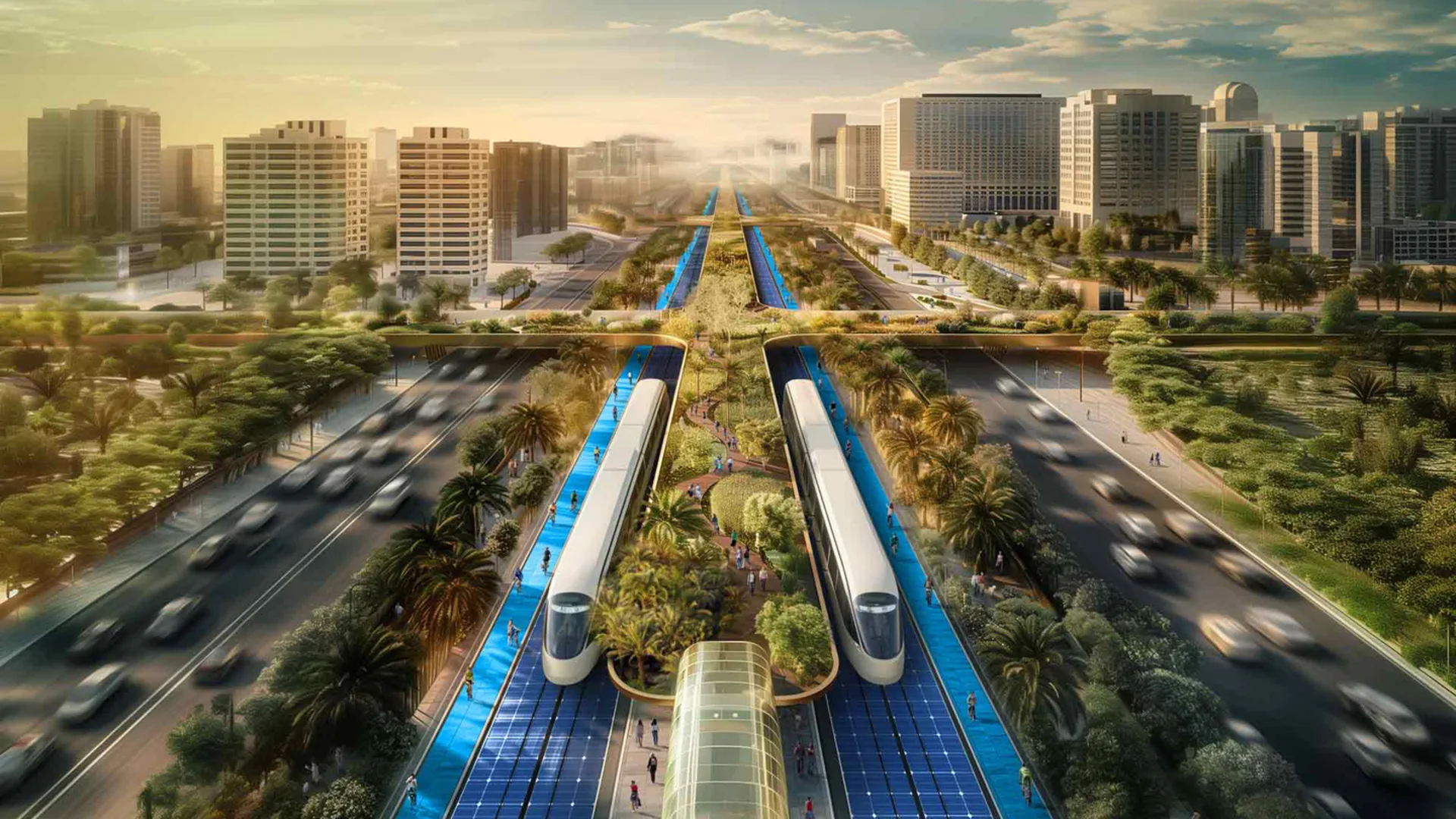
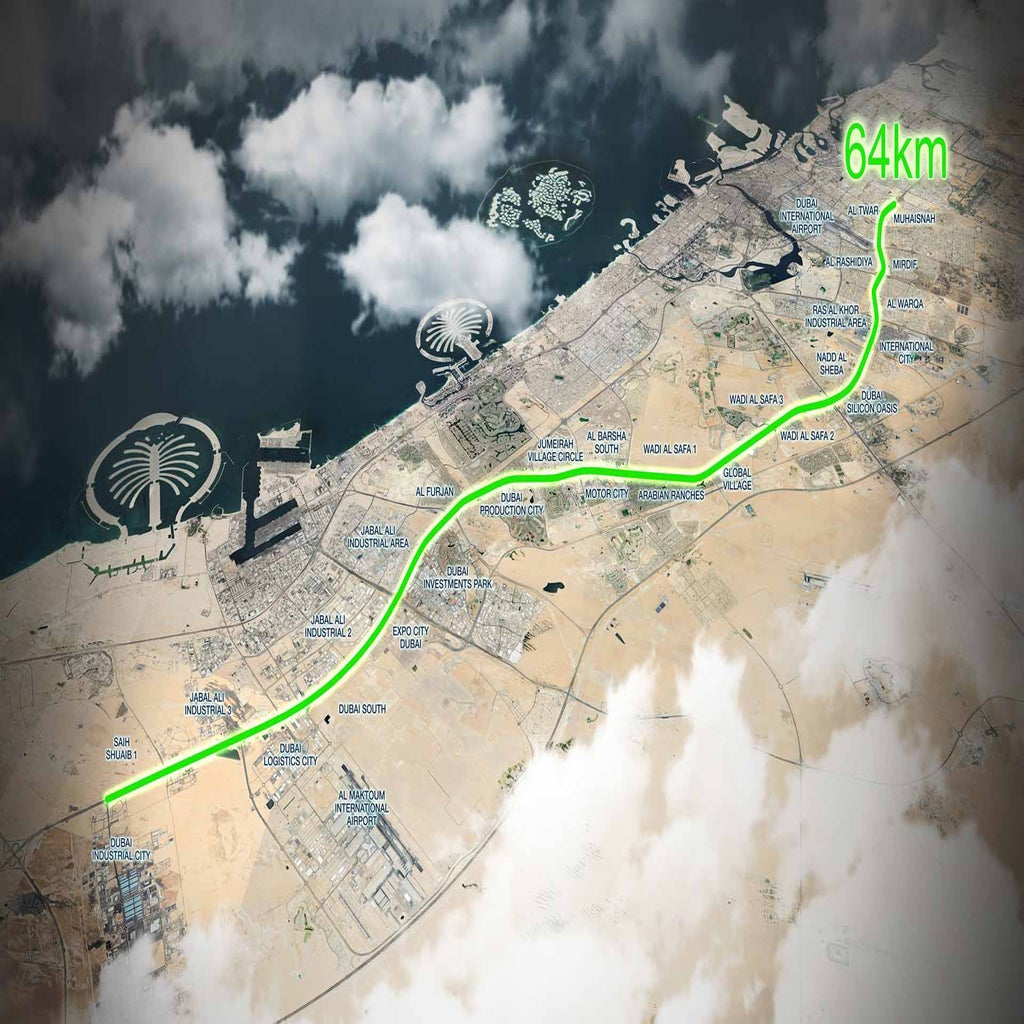
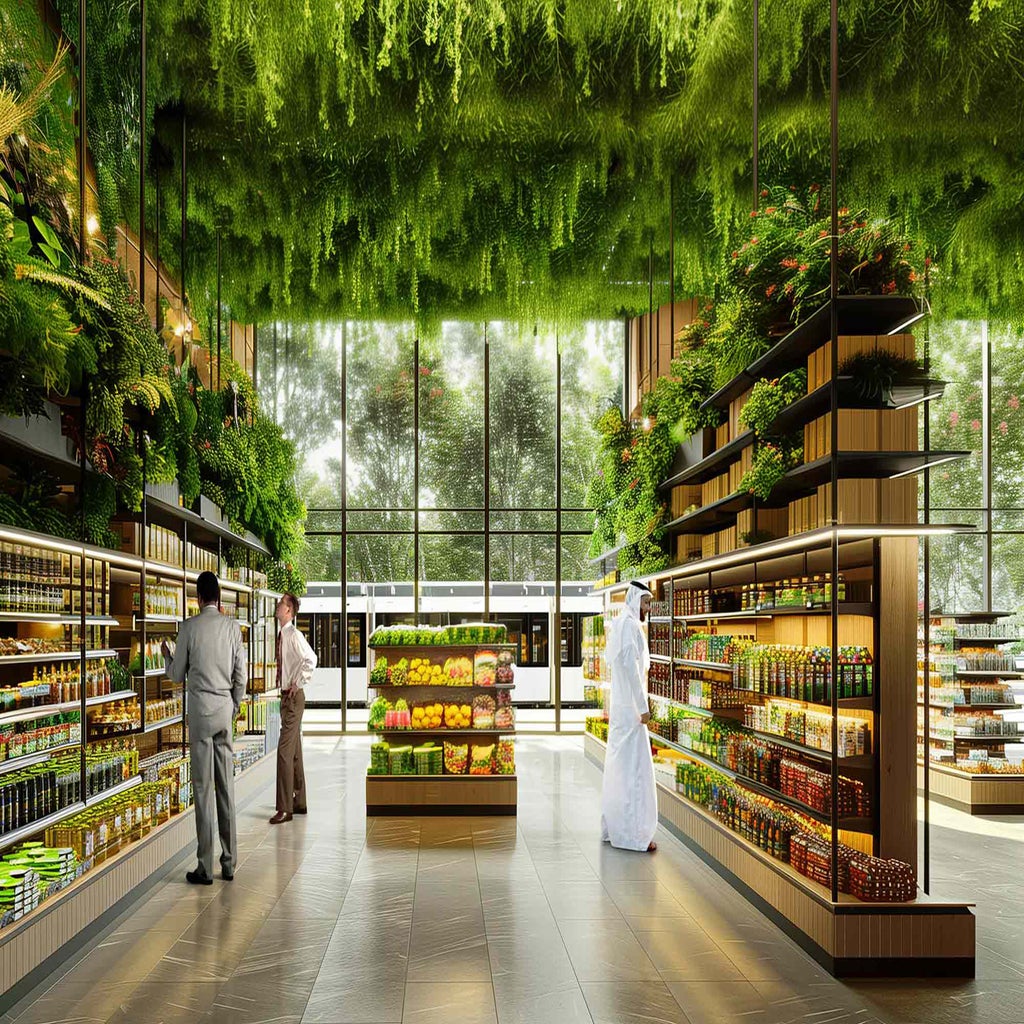
The Green Spine is like New York City’s High Line on steroids. It will serve as Dubai’s sinuous version of Central Park. While there’s still no timeframe for its execution, the project is part of the Dubai 2040 Urban Master Plan, which anticipates the city’s growing to nearly eight million residents. The Green Spine aims to redefine this mirage of a metropolis by turning its main car traffic artery into a 40-mile-long sustainable corridor full of lush plants and one million trees.
Designed by UAE-based Urb—which calls itself a “highly experienced developer of Net Zero Sustainable Cities”—the Dubai Green Spine will transform the Sheikh Mohammed Bin Zayed Road into an indispensable part of the city. A series of elevated and ground-level pathways full of greenery and multifunctional public spaces will fill the road. It will also integrate a large solar panel farm, which will power the new infrastructure and tens of thousands of homes around it.
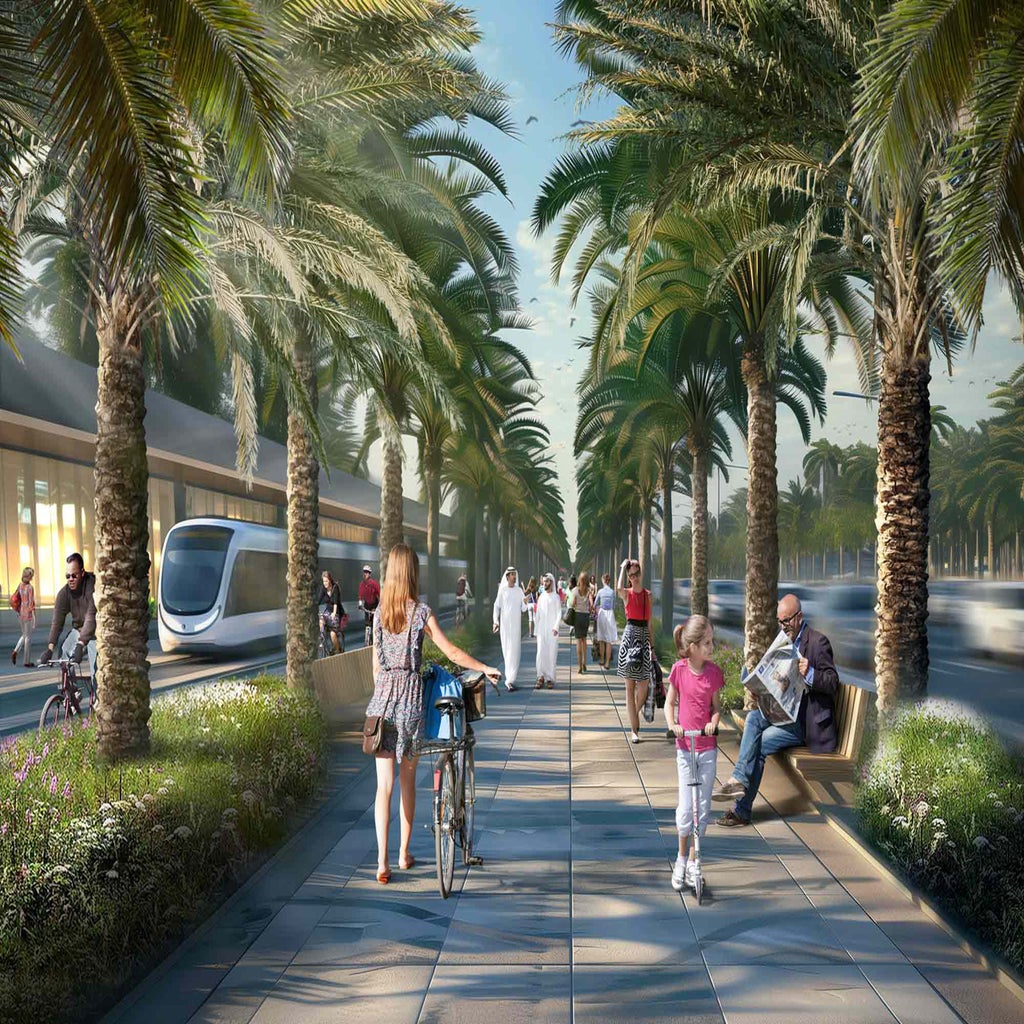
The goal of the Green Spine is to get people to start using their feet and bikes to commute, shop, and chill. Urb believes that the project will significantly reduce the city’s carbon footprint, improve air quality, reduce urban heat, and offer residents and visitors safe and attractive routes for commuting and leisure. The company’s CEO, Baharash Bagherian, believes it isn’t just about transit but about transforming urban functionality, transitioning the city’s spirit from car-centric to human-centric. “It challenges conventional infrastructure norms, proving that our streets can do more than facilitate car traffic; they can significantly enhance quality of life,” Bagherian says.
The Green Spine feels like something that Dubai urgently needs. More importantly, it looks like a feasible project. Bagherian tells me via email that “Dubai is uniquely positioned to turn such visions into reality, given its strong commitment to enhancing livability and sustainability.”
In contrast, consider Saudi Arabia’s crazy Neom, a megalomaniac project that’s projected to span thousands of square miles along the Red Sea and the Gulf of Aqaba. The $500 billion project is the stuff of pharaohs, encompassing various massive projects that have been publicized with ridiculous 3D designs and futuristic names like Epicon, Oxagon, Utamo, Trojena or Malagon.
The Line, the most well-known Neom project, is the antithesis of the Dubai Green Spine. Critics have slammed the proposed 105-mile-long horizontal skyscraper designed by Morphosis as the perfect example of what not to do in city planning, arguing that its linear design and colossal size will lead to significant mobility and habitability challenges.
The Line’s idea is so bad in fact, that Rafael Prieto-Curiel—a faculty member of the Complexity Science Hub—published a study in the prestigious scientific journal Npj Urban Sustainability titled “Arguments for building The Circle and not The Line in Saudi Arabia.” Prieto-Curiel argued that The Line’s layout will make efficient transportation and accessibility nearly impossible, with long travel distances and a dense population making daily life cumbersome. It’s no wonder that its size was finally downsized to 2.5 miles, in part pushed by Neom’s dismal financial prospects, which have also led to reports of various project cancellations, raising doubts about its completion.
The sheer scale and cost of Neom’s developments, coupled with the logistical challenges, environmental issues, and a total lack of ethics make Neom the perfect example of futuristic dystopia.
Rather than trapping millions of people in a thin steel-and-glass canyon in the middle of the desert, the Dubai Green Spine is designed to join a city divided by a highway. It is a practical enhancement to an existing urban area.
Other cities have built similar greenways, albeit at a smaller scale and not under the same environmental circumstances. Madrid, for example, had a similar problem with its 20-mile-long M-30 orbital highway. It is the busiest road in Spain, originally conceived to help drivers cross the city without actually entering the city. As the city grew, the road ended up dividing Madrid until parts of itwere put underground to fix the asphalt scar. It was replaced by a multitude of beautiful parks, pathways, and public sports facilities known as Madrid Rio, which is now one of the most popular and enjoyable public spaces in the Spanish capital.
Like the M-30, the Green Spine won’t put all of its road underground, but is a much larger and complex undertaking than Madrid Rio. The Green Spine will incorporate thousands of solar panels that will produce 300 megawatts to power itself and 130,000 additional homes around it. According to Urb, the Green Spine will radically reduce CO2 emissions thanks to solar power combined other features including energy-efficient buildings, walking and cycling paths, and thousands of sensors and electronic infrastructure designed to manage traffic.
One of the main challenges for the Dubai project is its maintenance. This is something that Bagherian and his team have carefully considered while designing it. The city already makes intensive use of costly desalination plants to sustain its population’s needs, but desalinization comes with a huge energy bill.
As Bagherian tells me, the green corridor is designed to use significantly less water than conventional green spaces by adopting additional passive and active water-saving strategies. The first is xeriscaping, a landscaping design technique that uses slow-growing plants that are adapted to arid environments to conserve water and reduce yard trimmings. The project will also use native plant species:. “We plan to use Ghaf Tree (Prosopis cineraria), Date Palm (Phoenix dactylifera), and Sidra Tree (Ziziphus spina-christi),” says Bagherian. These trees are considered botanical marvels because of their ability to thrive in arid environments where most plants would die.
Bagherian also says that the gardens will use zeolite—microporous materials that have the ability to retain water—and mulch to enhance soil water retention, minimizing the need for frequent irrigation.
The project will use recycled water from the city for a smart irrigation system that adjusts watering schedules based on real-time data, such as soil moisture levels, weather forecasts, and plant needs. “These systems also include leak detection technology to promptly address any issues, preventing water waste and ensuring efficient operation,” he says.
In addition to this, the Green Spine will incorporate bioswales along the entire length of the project to capture and harvest stormwater runoff which, according to Bagherian, is crucial given Dubai’s history of heavy flooding and the increasing risks due to climate change. He claims that “this combination of native plant species, water conservation methods, stormwater capture, and smart irrigation systems sets a new standard for sustainably planning green spaces in arid climates, ensuring every drop of water is used efficiently and effectively.”
If the plan goes as Urb expects, the Green Spine may become a model for other cities, especially now, with the increasing number of extreme heat waves hitting the world. It exemplifies a pragmatic approach to urban development, focusing on enhancing livability and sustainability within an existing city framework. The antithesis of Saudi Arabia’s colossally impractical vision of the future.
This entry was posted on Monday, July 15th, 2024 at 8:43 am and is filed under Green Design. You can follow any responses to this entry through the RSS 2.0 feed.
Both comments and pings are currently closed.
Comments are closed.
ABOUT
Black Swans / Green Shoots examines the collision between urbanization and resource scarcity in a world affected by
climate change, identifying opportunities to build sustainable cities and resilient infrastructure through the use
of revolutionary capital, increased awareness, innovative technologies, and smart design to make a difference in the
face of global and local climate perils.
'Black Swans' are highly improbable events that come as a surprise, have major disruptive effects, and that are
often rationalized after the fact as if they had been predictable to begin with. In our rapidly warming world, such
events are occurring ever more frequently and include wildfires, floods, extreme heat, and drought.
'Green Shoots' is a term used to describe signs of economic recovery or positive data during a downturn. It
references a period of growth and recovery, when plants start to show signs of health and life, and, therefore, has
been employed as a metaphor for a recovering economy.
It is my hope that Black Swans / Green Shoots will help readers understand both climate-activated risk and
opportunity so that you may invest in, advise, or lead organizations in the context of increasing pressures of
global urbanization, resource scarcity, and perils relating to climate change. I believe that the tools of business
and finance can help individuals, businesses, and global society make informed choices about who and what to
protect, and I hope that this blog provides some insight into the policy and private sector tools used to assess
investments in resilient reinforcement, response, or recovery.