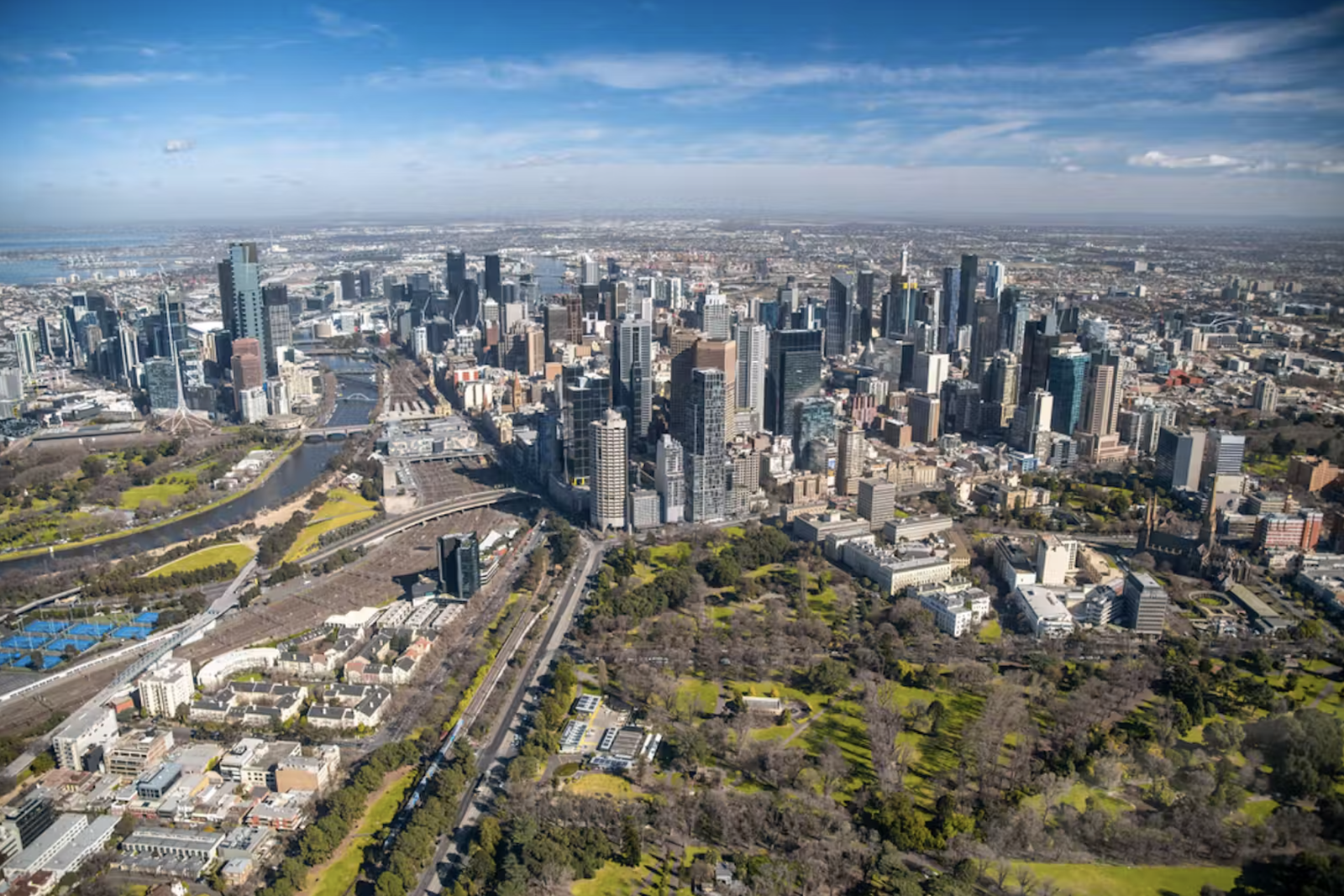
Cities have a central role to play tackling climate change. They contribute 67–72% of the greenhouse gas emissions which are heating up the planet.
At the same time, cities are increasingly at risk from global warming. Flood, fire and drought are affecting everything from the cost of insuring homes and businesses, through to impacts on health and safety.
This is critical given 90% of Australians live in urban areas. Globally, cities are home to more than four billion people.
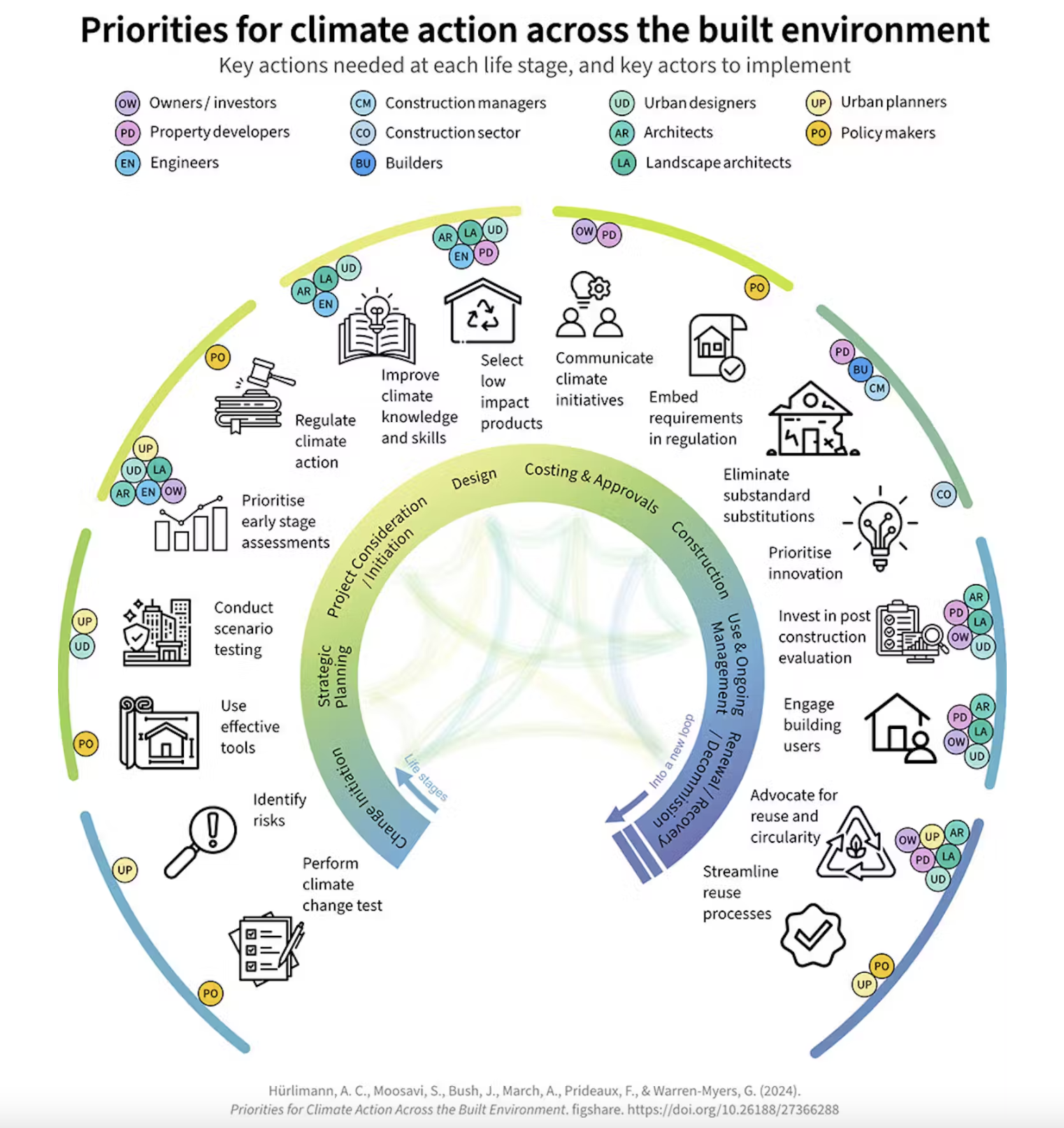
Our new study identifies 16 priority actions to address climate change in the construction and management of cities.
Building smarter
Climate change must be a key consideration when designing, building and managing our cities. The emissions generated need to be minimised and eventually eliminated.
We must build in locations, and in ways, that reduce climate risks. But policies governing how our cities are designed and constructed don’t achieve this.
A recent study of three local government areas identified only limited action on adaptation and mitigation. Other research has found few urban development policies include carbon reduction goals that meet international targets.
The National Housing Accord will see more than one million houses built by 2029. These new homes must address the climate challenge.
16 areas for priority action
The priority areas in our new study were informed by interviews with more than 150 stakeholders working in urban planning, architecture, landscape architecture, urban design, sustainability, construction and property.
The actions they identified cover the entire life cycle of the built environment.
One of the first barriers to overcome is the perceived lack of agency among industry professionals to initiate or demand climate action. They perceive others, such as property owners or clients, to have more influence.
Climate change risks should be identified in the early stages of planning new developments, backed up by effective tools to make risk identification and action easier:
There were areas that were identified as being flood prone or risk prone. But there was no strategy to deal with what happens to those areas – An urban planner
Once specific projects are being considered it is important to prioritise early stage climate assessments, supported by policies which mandate climate action:
Everyone has good intentions but without big formal legislation around it, everyone’s just sort of making their way in the dark – A construction industry professional
In the design stage, steps to improve the climate knowledge and skills of the workforce beyond disciplinary boundaries is critical. The selection of low-impact products and materials will also help ensure design is more climate responsive.
The highest number of hurdles to climate action were found to occur during the costing and approvals stage. Participants spoke of a highly competitive building industry. If climate change initiatives introduced at an earlier stage aren’t required by law, they are likely to be cut.
unless there’s something in it for them in terms of return on investment, it’s going to be hard to get them to do it, unless we make them – An urban planner
During the construction phase, product and material substitutions that have detrimental environmental impact should be eliminated. Innovation should be encouraged:
If you want to push the envelope a little bit in terms of using recycled materials […] that’s a bit of a barrier. To push innovation is difficult – A landscape architect
Post-construction
Once construction is complete and buildings and public spaces are being used, it is important to invest in a thorough evaluation process. Building users should be involved to ensure buildings are maintained for optimal climate outcomes:
[We] tried to achieve the six star rating […] the client has to maintain it [the building] for a year, and that’s when things start to fall off – An architect
When it comes to area upgrades or building renewals, advocating for reuse and materials circularity is important. But the custom of demolishing and building anew, is hard to shift:
The reuse of the existing building obviously generates significantly less waste and involves less material. So, design decisions and strategic decisions around using existing buildings is really important – An urban designer
Working together
This is a time of significant change in our urban areas.
We need to make sure climate action is embedded in every stage of decision making. This may mean more efficient use, and reuse, of the existing built stock. This will require an overhaul of policies regarding building retrofits, and a change in mindsets.
The priority actions to address climate change in cities can be implemented across a range of levels for:
• individual professionals – pursue development of their climate change skills, including opportunities provided by professional associations
• professional practices – review internal processes to ensure climate action is mainstreamed across projects, and in company decision making
• universities teaching built environment professional degrees – embed climate change knowledge, skills, and competencies across the curriculum
• governments at all levels – review policy settings to mandate mitigation and adaption.
By addressing these actions, we can collectively work towards achieving our emission reduction targets and making sure our cities minimise climate change risks.

Cities Are Heating Up Planet: How They Can Do More To Fight Climate Change
July 4th, 2025
July 4th, 2025
Via Illuminem, a look at how cities are heating up the planet – how they can do more to fight climate change:
This entry was posted on Friday, July 4th, 2025 at 1:53 pm and is filed under Extreme Heat, Green Design, Resilient Infrastructure. You can follow any responses to this entry through the RSS 2.0 feed.
Both comments and pings are currently closed.
ABOUT
'Black Swans' are highly improbable events that come as a surprise, have major disruptive effects, and that are often rationalized after the fact as if they had been predictable to begin with. In our rapidly warming world, such events are occurring ever more frequently and include wildfires, floods, extreme heat, and drought.
'Green Shoots' is a term used to describe signs of economic recovery or positive data during a downturn. It references a period of growth and recovery, when plants start to show signs of health and life, and, therefore, has been employed as a metaphor for a recovering economy.
It is my hope that Black Swans / Green Shoots will help readers understand both climate-activated risk and opportunity so that you may invest in, advise, or lead organizations in the context of increasing pressures of global urbanization, resource scarcity, and perils relating to climate change. I believe that the tools of business and finance can help individuals, businesses, and global society make informed choices about who and what to protect, and I hope that this blog provides some insight into the policy and private sector tools used to assess investments in resilient reinforcement, response, or recovery.