

November 1st, 2023
Courtesy of Grist, a look at if/how ACs can cool the world without warming it:
A warm breeze brushes your arms as you sit lazily on the balcony. You wave to your elderly neighbor, Roy, across the way. He’s always yelling at you to “close the door; you’re wasting energy” — no matter your patient explanations that the building’s AC knows when the door is open and accounts for it.
You helped him with the settings on the TempFlow in his apartment. He likes it mad cold inside — maybe that’s just what he’s used to. But you have to laugh at him puttering around in his sweater and bow tie on a hot day like this …
This summer, we’ve covered a number of innovative solutions that cities around the world are implementing at a community level to combat deadly heat — things like tree equity, shade structures, and reflective pavement. But as the planet continues to warm, there’s no way around one bedeviling fact: We’re going to need more air conditioning to keep many areas habitable and save lives in the face of rising temperatures.
The problem is that AC also contributes to planetary warming. “We’re kind of stuck in this doom loop of AC right now, where people install more AC, it makes the climate worse. Climate ‘worse’ means people need more AC, and those continue to increase emissions,” says Vince Romanin, an engineer and self-described “thermo nerd.”
So, in order to truly save lives, AC needs to be more equitably distributed to the populations most at risk on a rapidly heating planet, and the technology itself needs an overhaul to avoid skyrocketing emissions.
Romanin is one of those working on the problem. Several companies, including Gradient where Romanin is CEO (which landed him on the 2021 Grist 50 list), are developing new AC technologies and approaches that are starting to show what a more efficient, less climate-intensive approach to cooling will look like.
Public health organizations like the Clinton Health Access Initiative, or CHAI, have also begun putting resources behind better AC, with the goal of bringing it to those who need it most. “There’s this opportunity to shift what would otherwise be a kind of niche AC for environmentally conscious consumers in high-income countries to actually be a low-cost, high-volume product for the growing middle classes in Nigeria, India, Indonesia,” Neil Buddy Shah, the CEO of CHAI, said in a panel with Grist’s CEO at Climate Week in September. “But the public sector and private sector have to come together and actually guarantee the demand.”
This week and next, we’re covering some of the innovations — both technological and market-based — that are coming together to create the future of climate-friendly, equitable air conditioning. This week, we start with the tech side. What will that future-friendly AC look like? How will it change the HVAC units and window ACs we’ve grown to rely on?
“There’s this kind of idea that HVAC products are boring and not exciting and ugly and hard to use,” Romanin says. “And that absolutely doesn’t need to be true.” He sees the challenge of creating better, more equitable AC as one that could usher in a new generation of heating and cooling products that offer better overall experiences.
Romanin says he got into the space not only from a desire to bring innovation into a polluting industry, but also to bring better, cleaner HVAC technology to the people who need it most. Gradient has partnered with the New York City Housing Authority as the first customer for its new, all-weather unit — a take on a heat pump that more closely resembles a window AC unit.
As we’ve covered before, heat pumps have been rising in popularity in recent years as a more efficient technology to replace both natural gas heaters and standard air conditioners. Gradient is aiming to increase accessibility and reduce cost with its compact design. It doesn’t require special permitting, holes in the wall, or skilled labor to install, making it a potential one-to-one replacement for multifamily units that rely on window AC, and also enabling buildings to retire their gas heating systems.
The company estimates that it offers up to a 95 percent reduction in direct emissions if it’s used year-round. Some of that, Romanin says, gets transferred to indirect emissions — it’s electric, so if it’s drawing power from a dirty grid, it offers something closer to a 30–45 percent reduction in overall emissions.
Air conditioning alone accounts for about 10 percent of global electricity use today. A substantial portion of the energy thirst related to cooling actually comes not from managing temperature itself, but managing humidity. To try and avoid working overtime to dehumidify through cooling, some other companies have designed ACs that decouple those processes, like the startup Transaera, which uses a drying agent to pull water from the air before cooling it.
Another way that Gradient and other companies aim to save emissions is by using a less potent refrigerant — the substances in AC units that change from liquid to gas to help absorb heat from the room being cooled. The regulatory environment surrounding refrigerants is continuously evolving. For instance, chlorofluorocarbons, or CFCs (the chemicals that eat up the ozone layer), used to be common refrigerants until they were phased out and ultimately banned. But today, most refrigerants are still greenhouse gases, often many times more potent than CO2.
Gradient currently uses a chemical called R-32, which has about a 70 percent lower Global Warming Potential than the industry standard, R-410A or Puron (which is also due to be phased out in the next two years).
Still, Romanin would like to do even better. His hope is that the U.S. will move toward allowing R-290, an even more environmentally friendly gas, for refrigeration. R-290 is propane — a naturally occurring gas that is also, obviously, flammable. But in his opinion, manufacturers of synthetic refrigerants have played a role in overselling the flammability risks of propane. “R-32 is also flammable, just to a different level. And many, many fridges use butane as a refrigerant,” he points out.
Other researchers are attempting to remove the need for refrigerants altogether. A team at Harvard designed an AC prototype that uses evaporative cooling, the same process our bodies use to cool us off when we sweat. Water absorbs heat as it evaporates, but in doing so it adds humidity to the air as well — the Harvard researchers managed to avoid this by using a water-repellent coating that effectively separates the water vapor from the cooled air.
In the future, Romanin hopes that Gradient can move into international markets where AC is most needed, and where demand is expected to grow the most. He also sees an opportunity for the industry to shift more broadly into more efficient systems that ultimately offer better experiences.
One way to achieve that is through software. Parity, a software company based in Ontario, offers remote HVAC management for large apartment buildings and hotels. The idea is that building owners can save both money and energy by using data on weather, occupancy levels, and building design elements to adjust heating and cooling supply, while still maintaining a comfortable temperature for residents. “When I tell people what I do for a living, they’re like, ‘Oh wow, it’s kind of surprising that that’s not already happening,’’’ says James Hannah, Parity’s managing director for the U.S. He sees energy efficiency as a crucial step toward overall decarbonization. “Regardless of whether you still have a gas-fired boiler or you’ve switched over to some other technology, the best thing to do is to not overconsume,” he says.
In the long term, Gradient wants to move toward an app-controlled experience that would adjust indoor temperatures based on the season or the time of day. The idea is akin to what Parity offers from an efficiency standpoint, but it would also involve a shift in actual demand. For example, the best temperature for healthy sleep is a few degrees lower than what most people would consider a comfortable daytime room temperature. Leaning into these kinds of daily and seasonal shifts could help people feel more comfortable indoors, and also reduce our reliance on constantly blasting the heat or AC.
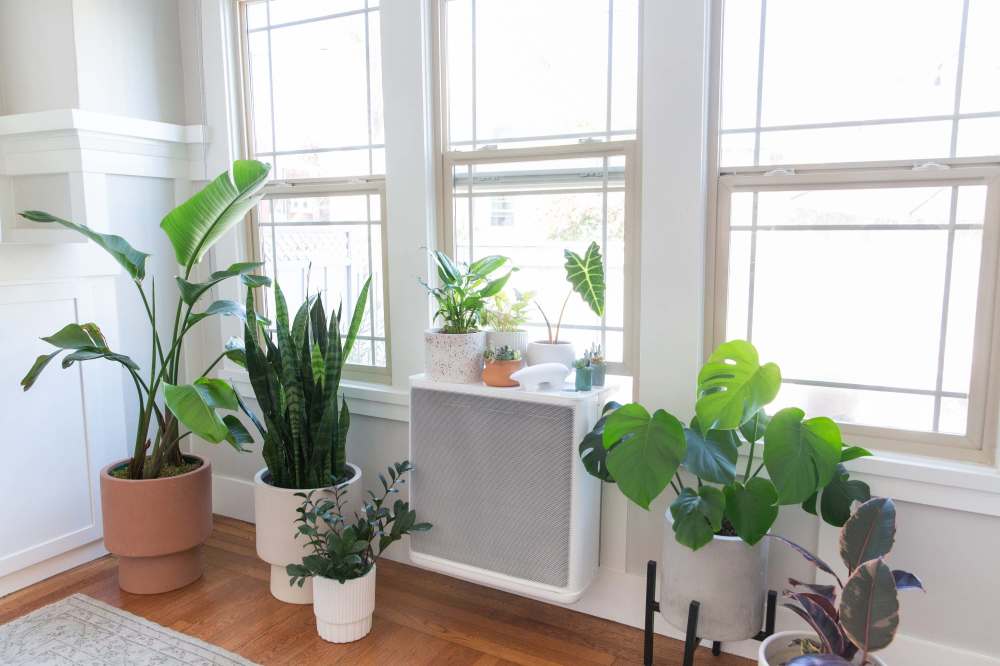
That desire for a better product could also help drive the scale and the speed necessary to decarbonize, especially in wealthier countries, Romanin believes. From a pleasure perspective, the number one problem that Gradient’s current model solves is giving residents their window back. Rather than sitting on top of the window sill, it straddles it, and its top also serves as a shelf.
“It’s hard to envision what a cool, exciting AC is because they’re all so boring,” he says. “But in reality, the thermal comfort of your home is a very emotional part of your home. And there’s no reason that the products that we use to make our home comfortable couldn’t provide exciting experiences.”
'Black Swans' are highly improbable events that come as a surprise, have major disruptive effects, and that are often rationalized after the fact as if they had been predictable to begin with. In our rapidly warming world, such events are occurring ever more frequently and include wildfires, floods, extreme heat, and drought.
'Green Shoots' is a term used to describe signs of economic recovery or positive data during a downturn. It references a period of growth and recovery, when plants start to show signs of health and life, and, therefore, has been employed as a metaphor for a recovering economy.
It is my hope that Black Swans / Green Shoots will help readers understand both climate-activated risk and opportunity so that you may invest in, advise, or lead organizations in the context of increasing pressures of global urbanization, resource scarcity, and perils relating to climate change. I believe that the tools of business and finance can help individuals, businesses, and global society make informed choices about who and what to protect, and I hope that this blog provides some insight into the policy and private sector tools used to assess investments in resilient reinforcement, response, or recovery.